Before ordering parts
Gather exact kit and part numbers, installation instructions and vehicle-specific fitment evidence.
We use essential storage to run the site. With your permission, we use Google Analytics to understand site use and improve our services. We do not use analytics to collect the details you enter in calculators or forms.
Privacy PolicyTowSense / 4WD builds & modifications
Bring your suspension, tyres, protection and equipment plans together. Identify loading questions and evidence to prepare before speaking to an authority or certifier.
Suggested starting point
For broader accessory, modification and touring-build planning. Describes proposed changes and evidence to verify; it does not certify modifications or calculate an incremental accessory-position build-up from an unladen baseline.
One-off automated digital assessment, not a personal consultation. Review the required inputs before paying. Missing figures remain unknown; payment does not verify them.
Start with the whole picture
A suspension package, larger tyres, bar work and recovery gear can each look straightforward in isolation. Start with the exact vehicle, its existing equipment and the complete proposed package.
Gather exact kit and part numbers, installation instructions and vehicle-specific fitment evidence.
Keep GVM, GCM, axle, towing and coupling ratings separate. A proposed increase in one does not establish an increase in another.
List existing changes as well as new ones, and prepare questions about combined height, clearance and component interactions.
Worked preparation scenario
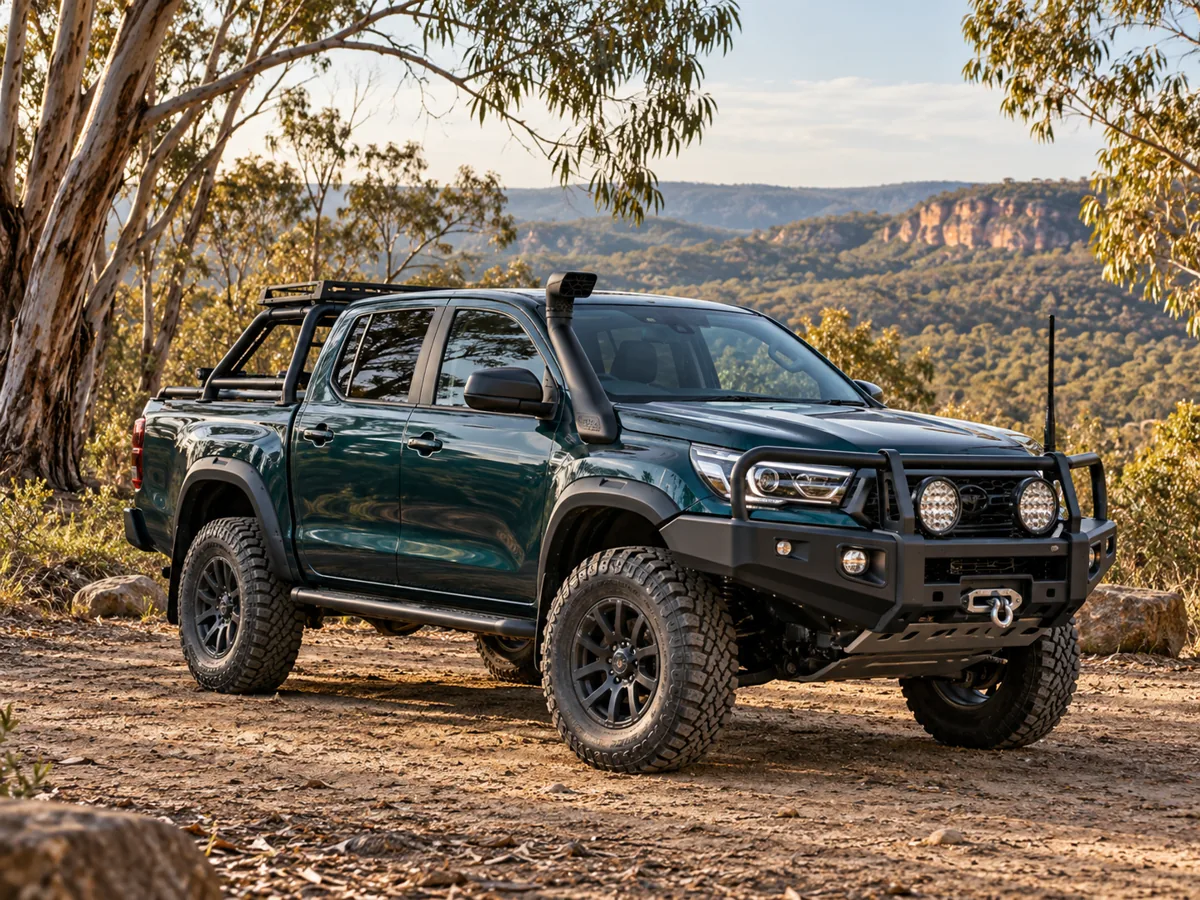
Fictional example: a dual-cab owner wants larger tyres, a suspension package, a bullbar and winch, plus a canopy and second battery. The vehicle already carries a drawer system and recovery gear.
Record the exact vehicle variant, current tyres and suspension, existing equipment and intended passengers, luggage and towing use. Separate what is already fitted from the proposed purchases.
The owner has brochure weights but no loaded axle readings, no installed weight for the canopy package and no vehicle-specific documents for the combined tyre and suspension changes. Those items remain unknown.
Weigh the current setup, request installed weights and fitment documents from suppliers, and take the complete proposal to the relevant authority or authorised certifier before ordering. Then use the gathered figures to review the whole build.
Preparation outcome: a documented parts list, clearly identified unknowns and specific questions to resolve before spending. This example does not calculate a new rating or approve the proposed modifications.
Prepare a worksheet for your own buildUse the exact vehicle and proposed package. Keep current measured loads separate from equipment you have not fitted yet.
Reference diagram, not to scale. Follow the selected tool and weighing-service instructions.
Gather the exact variant's GVM, GCM and axle ratings from applicable manufacturer or engineering documents. One rating does not establish another.
Record people, fuel, cargo and fitted equipment present for the axle readings. Do not add those same loads again.
Use the selected tool's wheelbase and coupling-distance fields and units. The conventional lever estimate does not model a weight-distribution hitch or gooseneck.
No. The preparation worksheet organises evidence and questions. It does not determine permissible dimensions or certify a modification.
This page addresses road-registered vehicle preparation. Competition eligibility and off-road performance are outside this assessment scope.
Choose the step that matches the information you have today.
Explore the existing build assessment and check its scope before continuing.
Complete Vehicle Build Assessment — A$149Use the national worksheet to organise proposed changes, documents and questions.
Prepare modification evidence