Moving equipment
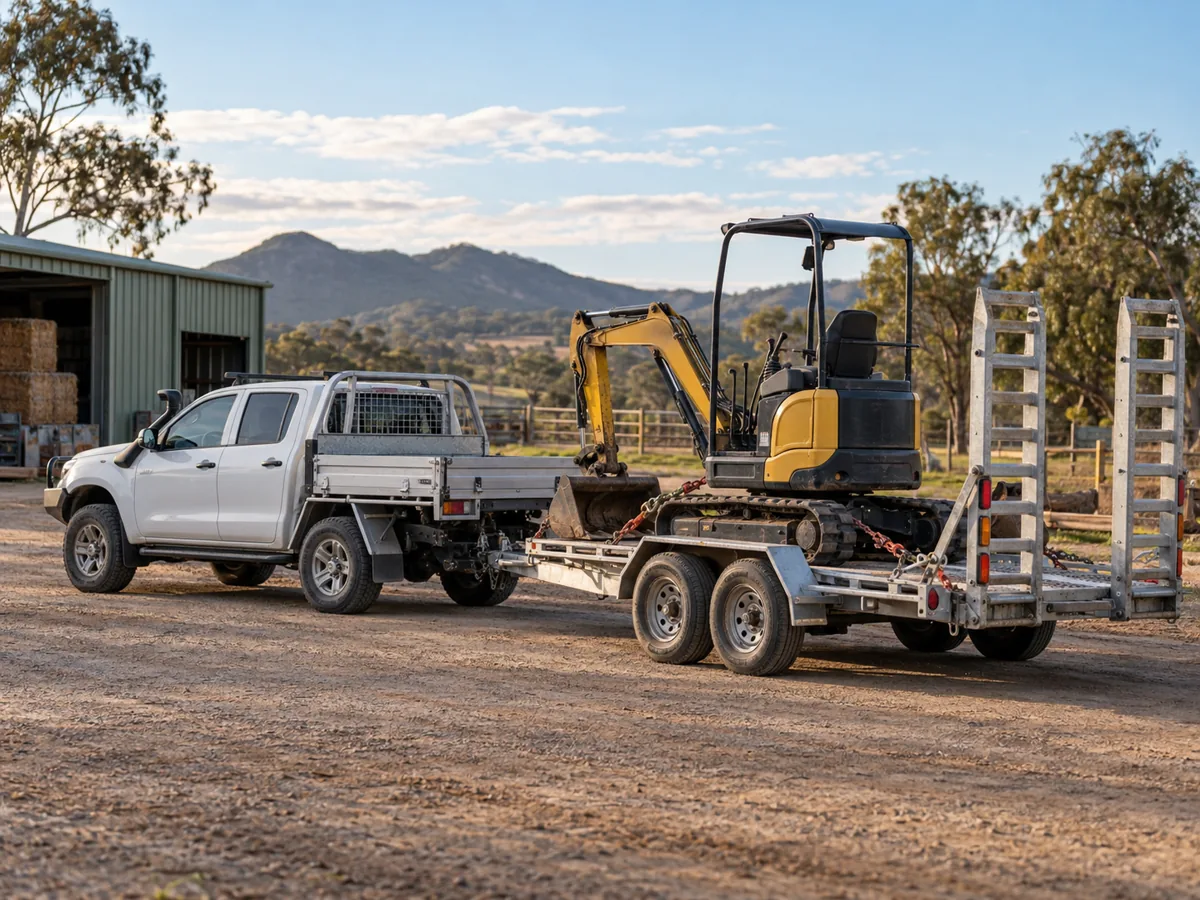
Identify the equipment and other load, its placement and the exact trailer limits.
We use essential storage to run the site. With your permission, we use Google Analytics to understand site use and improve our services. We do not use analytics to collect the details you enter in calculators or forms.
Privacy PolicyTowSense / General & equipment trailers
Prepare ratings, loaded measurements and load-position information for a box, enclosed or equipment trailer.
Suggested starting point
For a tow vehicle and loaded trailer combination, including a box, enclosed or equipment trailer. The product name says caravan; its scope also covers other trailer combinations with the required ratings and measurements.
One-off automated digital assessment, not a personal consultation. Review the required inputs before paying. Missing figures remain unknown; payment does not verify them.
Start with the whole picture
A box trailer, enclosed trailer or equipment trailer still needs its own ratings, loaded measurements and configuration information. Start with the load you intend to carry.
Identify the equipment and other load, its placement and the exact trailer limits.
Obtain the trailer's own ratings and coupling information rather than assuming its capacity from appearance.
Prepare the new vehicle's limits and loaded figures; the old combination does not establish the new one.
Start with the exact trailer and the load you intend to carry. Keep each configuration's measurements together.
Reference diagram, not to scale. Follow the selected tool and weighing-service instructions.
Record its identification, ATM, GTM, axle and coupling limits. Do not infer capacity from appearance or a different trailer.
List the equipment and other carried items, including where they sit. Use actual loaded readings rather than maximum ratings to infer current load.
Do not infer actual coupling weight by subtracting ATM and GTM ratings. Conventional towball geometry must not be used for unsupported coupling arrangements.
No. Check the selected tool's scope. Conventional towball calculations must not be applied to gooseneck or other unsupported configurations.
No. Weight preparation does not establish load-restraint compliance, trailer condition or legal permission to operate.
Prepare the exact combination before relying on a headline towing rating.
Explore the existing towing assessment and confirm the scope fits your setup.
Vehicle + Caravan Assessment — A$99Review the detailed calculator's supported inputs and coupling requirements.
Explore weight distribution