Setting up a new work vehicle
List the service body, storage, racks, batteries and permanently carried equipment before adding consumables.
We use essential storage to run the site. With your permission, we use Google Analytics to understand site use and improve our services. We do not use analytics to collect the details you enter in calculators or forms.
Privacy PolicyTowSense / Work vehicles & tradies
Consider tools, racks, materials, passengers and any trailer as a complete working load.
Suggested starting point
For the vehicle-only working load: payload, GVM and axle observations from your supplied ratings and loaded measurements. A trailer combination requires the A$99 assessment instead.
One-off automated digital assessment, not a personal consultation. Review the required inputs before paying. Missing figures remain unknown; payment does not verify them.
Start with the whole picture
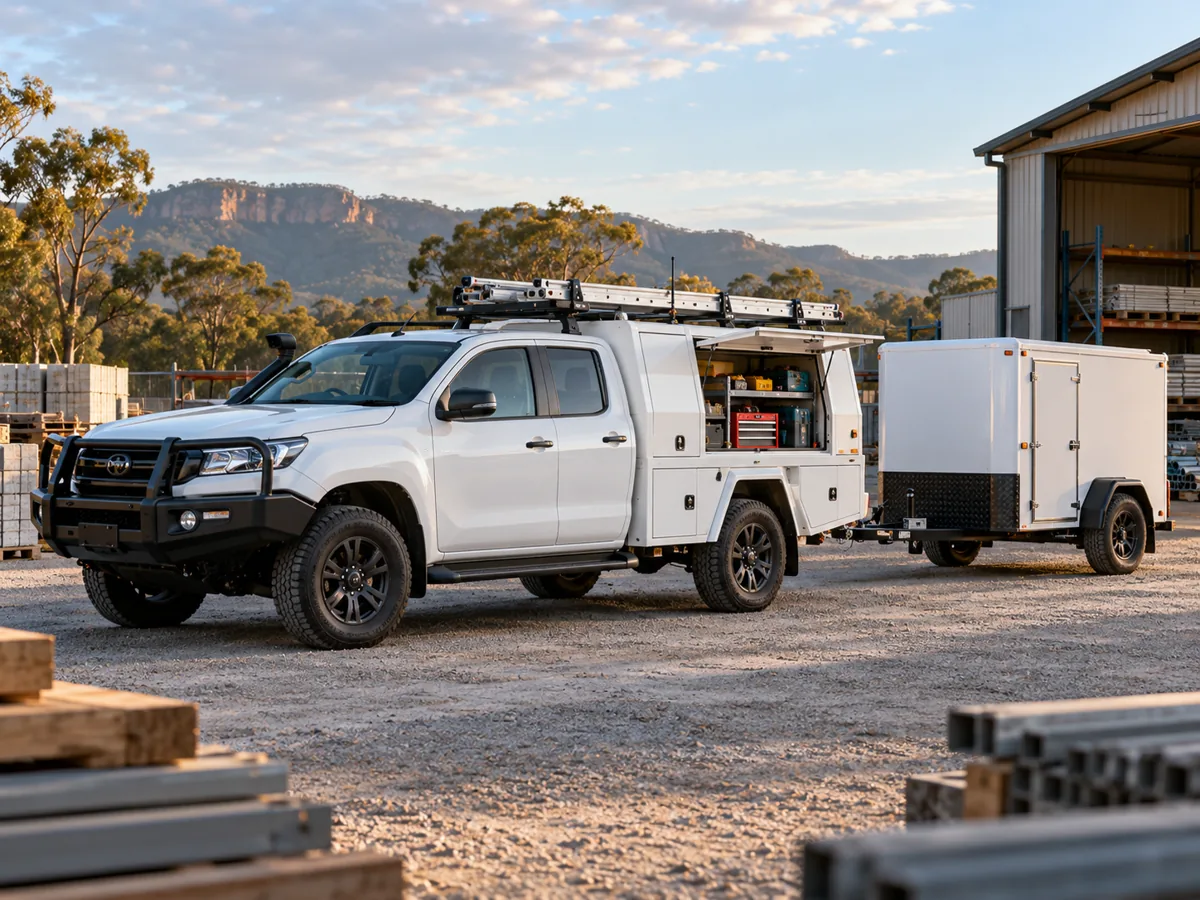
A service body, racks, tools, materials and passengers all belong in the working-load picture. A trailer adds another set of ratings and measurements to prepare.
List the service body, storage, racks, batteries and permanently carried equipment before adding consumables.
Prepare a typical working load and a heavier realistic configuration. Keep each scenario's measurements separate.
Collect trailer ratings and loaded figures alongside the tow vehicle's actual working load.
Prepare figures for the vehicle as used on the job. Keep a typical workday and a heavier configuration as separate scenarios.
Reference diagram, not to scale. Follow the selected tool and weighing-service instructions.
List the fitted body, racks, batteries and storage, then record the crew, tools and materials present for the measurement.
Use documented ratings for the exact vehicle and actual loaded axle readings. An empty-vehicle figure is not a working-load measurement.
Collect its ratings, coupling details and matching loaded measurements. Follow the selected tool's requirements before using a coupling estimate.
No. Vehicle-only payload preparation is relevant to work vehicles that do not tow.
No. TowSense loading observations do not certify workplace compliance, load restraint or suitability for a specific job.
A vehicle-only check and a trailer assessment need different information.
Review the A$49 vehicle-only Risk Scan. If you tow a trailer, choose the A$99 combination assessment above.
Risk Scan — A$49Use the existing vehicle checker to explore the vehicle's loading inputs.
Explore the vehicle checker